| Personal data |
| Surname | Khozias |
|---|
| Name | Beola |
|---|
| Patronym | Yankelevna |
|---|
| Birth year | 1940 |
|---|
| Birth month | 1 |
|---|
| Birth day | 2 |
|---|
| birth_place | Jēkabpils |
|---|
This is an old revision of the document!
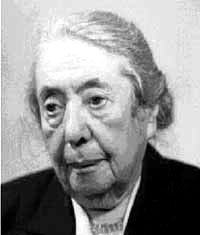
Shtern Lina Solomonovna (1878-1968)
| Personal data |
| Surname | Shtern |
|---|
| Name | Lina |
|---|
| Patronym | Solomonovna |
|---|
| Birth year | 1878 |
|---|
| birth_place | Liepāja |
|---|
| Death year | 1968 |
|---|
| Death place | Moscow |
|---|
| Sex | F |
|---|
Shtern Lina Solomonovna (1878, Liepāja, Courland Governorate ― 1968, Moscow) ― physiologist. Professor (1917), academician of the USSR Academy of Sciences (1939) and the USSR Academy of Medical Sciences (1944).
Until age seven she was raised by her grandfather, a rabbi. In 1898―1903 she studied at the medical faculty of the University of Geneva.
From 1904 she worked there at the department of physiological chemistry (from 1917 ― head of the department, the first woman professor at the University of Geneva).
From 1925 she lived in the USSR. In 1925―48 she headed the department of physiology at the 2nd Moscow State University (2nd MMI), and at the same time (in 1929―48) was director of the Institute of Physiology of the RSFSR People's Commissariat of Education, which she had organized (from 1939 ― under the USSR Academy of Sciences). In 1929 she took part in organizing, and was head of (until 1938), the Department of Developmental Physiology at the Central Research Institute of Maternal and Infant Care, and the Department of General Physiology at VIEM. The first woman academician of the USSR Academy of Sciences.
In 1949 she was arrested on a charge of cosmopolitanism in connection with the case of the Jewish Anti-Fascist Committee, to whose presidium she had been elected in 1941. She was held in prison without trial until July 1952. The court sentenced Sh. to five years' exile in Jambyl (Kazakhstan).
She served a year of her exile and, after Stalin's death in 1953, returned to Moscow. In 1954―68 she headed the physiology department of the Institute of Biophysics of the USSR Academy of Sciences.
Her main scientific works are devoted to the problems of the chemical and physicochemical bases of the vital activity of the human and animal organism, as well as to oxidative enzymes. She was one of the founders of the doctrine of the histohematic barriers of the organism, and established their importance for maintaining homeostasis. In 1921, together with R. Gautier, she proposed the concept of the “blood-brain barrier” to denote the mechanism that selectively regulates the exchange of substances between the blood and the central nervous system and performs a protective function for the organism, for which she received the Stalin Prize in 1943. Sh.'s work on the significance of nonspecific metabolic products for vital activity played an important role in resolving the problem of the humoral regulation of the body's functions. In 1947 she proposed an effective method for treating tuberculous meningitis by introducing streptomycin into the spinal fluid. She was one of the founders and chief editor (1935―49) of the journal “Bulletin of Experimental Biology and Medicine.”
Honored Scientist of the RSFSR (1934).
Works: The Blood-Brain Barrier. Moscow; Leningrad, 1935. (Co-authored); The Immediate Nutritive Medium of Organs and Tissues. The Physiological Mechanisms Determining Its Composition and Properties. Selected Works. Moscow, 1960.
REE
From the book by Emanuil Broytman, Famous Jews